
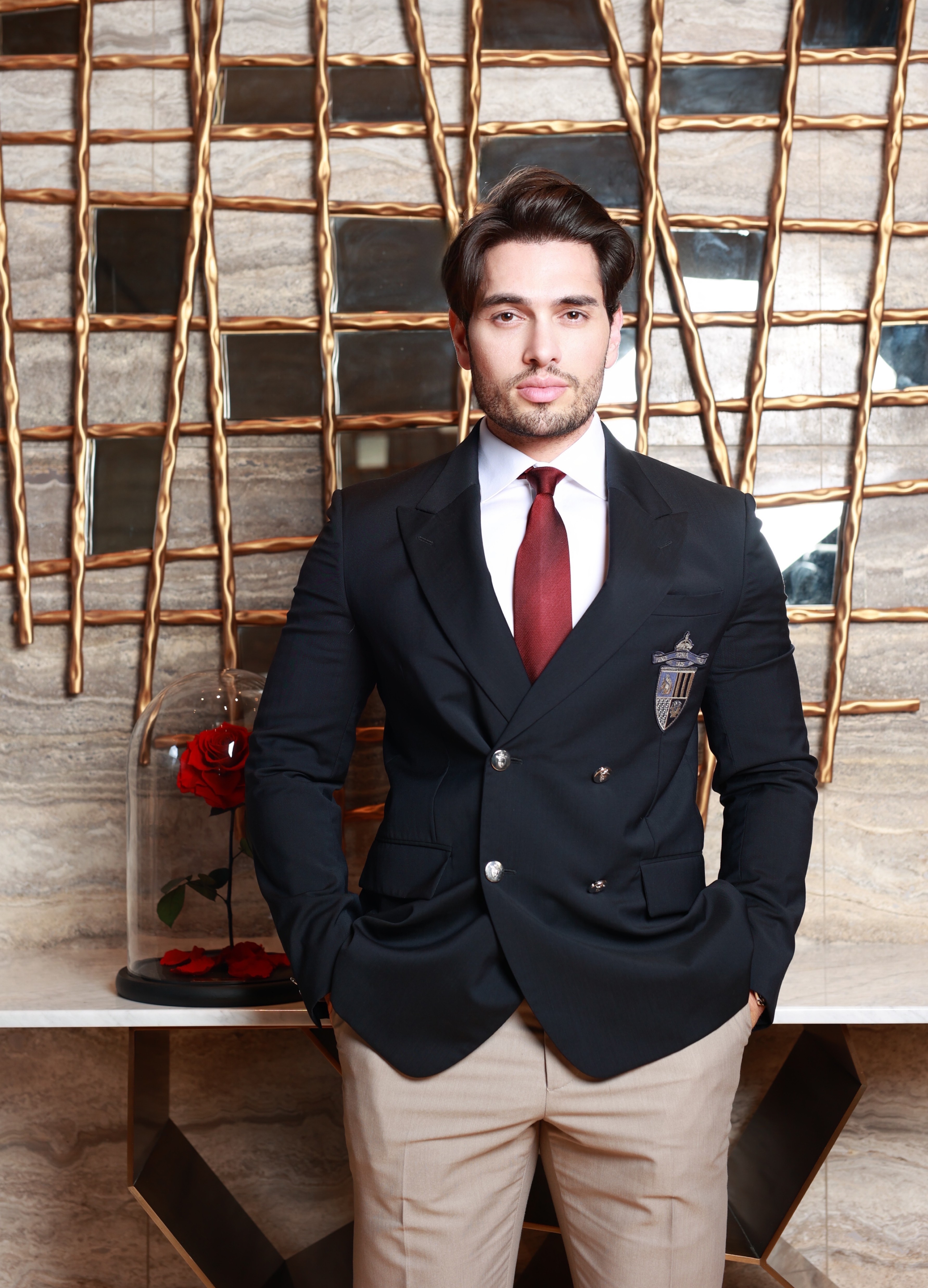
Mark-Francis Vandelli is perhaps the closest British television has come to an old-world gentleman: part Cary Grant, part Oscar Wilde, with the collector’s eye of Lorenzo de’ Medici. An Anglo-Russian-Italian aesthete, art historian and designer, he has spent more than fifteen years making sophistication feel like the only truly original move left in reality television. Now the founder of the jewellery house Roubier and the newest British arrival on American screens via Ladies of London: The New Reign, he has built a career on a principle that fashion often forgets but history rarely does: spectacle fades; taste endures.
Reality television runs on a simple fuel: people willing to perform the least attractive versions of themselves for public consumption. Mark Francis Vandelli has spent fifteen years making a career out of refusing the invitation.
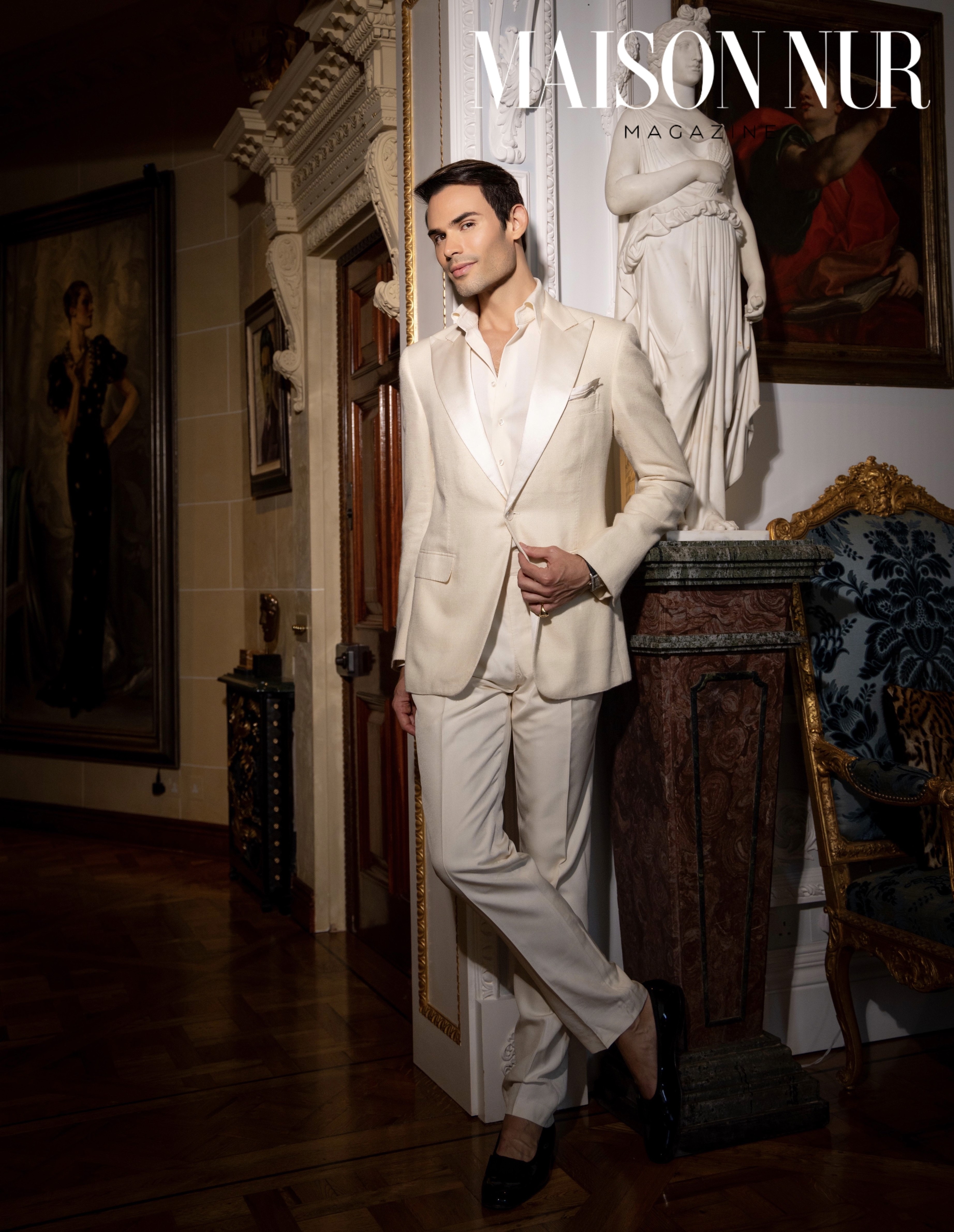
While Made in Chelsea cycled through tears, betrayals and producer-assisted romances, Vandelli occupied the edge of the frame in an impeccably cut suit, delivered a line of immaculate timing and left everyone else’s theatrics looking decidedly vulgar. It is a curious strategy for reality television, but perhaps the only genuinely original one the medium has produced. No one else has managed it quite so successfully.
The explanation lies in the fact that he never really belonged there in the first place.
Educated at St Paul’s before reading History of Art at UCL, where he specialised in the Italian Baroque, Vandelli was running a Parisian jewellery house supplying Chanel and Tom Ford by the age of twenty-two—fashion houses that reserve their confidence for people who possess genuine expertise rather than the appearance of it. An eponymous menswear label followed, alongside ambassadorial roles for the world’s leading auction house, Christie’s, Loro Piana and Cifonelli, arguably the last great tailoring house in Paris.
His latest venture, Roubier, is the inevitable conclusion to a career spent studying beautiful objects; the culmination of a lifelong fascination with jewellery, craftsmanship and personal expression. The concept is deceptively simple: timeless, transformable jewels designed to evolve with their wearer. Birthstones and celestial motifs migrate effortlessly between earrings, bracelets and necklaces, creating pieces that are as individual as the people who wear them. The engineering behind such versatility is formidable, but Vandelli has long maintained that nothing motivates him more than being told something cannot be done. Luxury, Vandelli argues, should adapt to its wearer rather than demand the reverse.z
“In a world saturated with people wearing the same things and chasing the same fleeting trends, I believe true luxury lies in individuality and versatility. Throughout history, transformable jewellery has been a hallmark of exceptional craftsmanship and the finest quality from nineteenth-century tiaras that could be turned into necklaces and brooches to the iconic zip necklaces of the 1950s. The greatest jewels in history were designed to evolve with the people who wore them. I wanted to revive that idea not as nostalgia, but as something entirely contemporary.”
Strip away the television career and what remains is an unusually serious student of aesthetics. The fame merely introduced him to a wider audience.
That distinction matters. Taste has become one of the most abused words in contemporary culture, largely because it is so often confused with consumption. Vandelli understands it in the original sense: as judgement. Something cultivated rather than purchased.
It also explains why he has endured while so many of reality television’s more conspicuous personalities have disappeared. He never seemed especially interested in celebrity for its own sake. There were no public meltdowns, carefully managed reinventions or calculated disclosures designed to sustain relevance between series. Instead, he practised something almost forgotten: leaving people wanting more.
Absence, after all, has always been more seductive than overexposure.
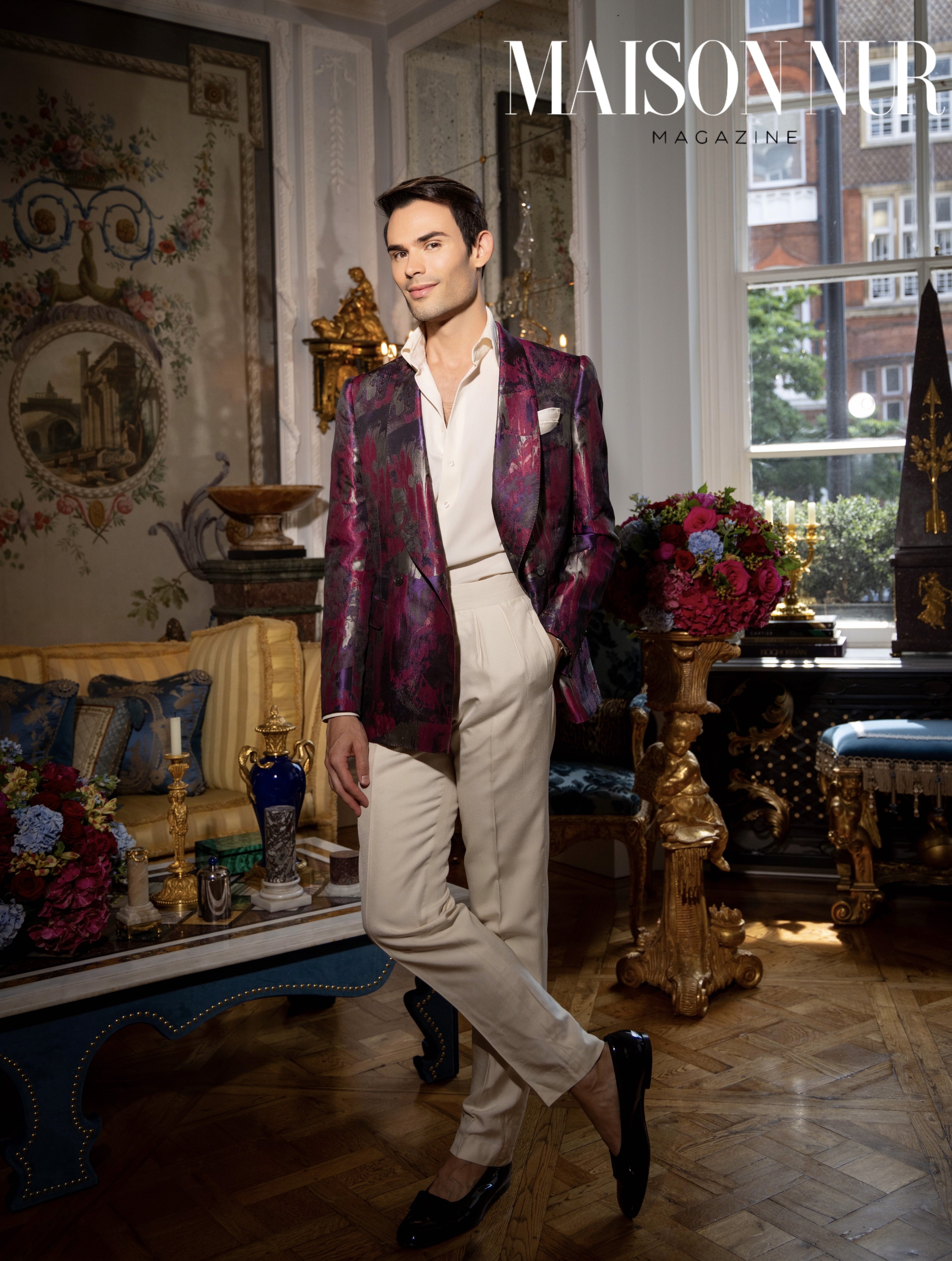
His discretion extends well beyond television. Despite a lifetime in the public eye, remarkably little is known about his private life, and one suspects that is entirely by design. In an era that mistakes disclosure for authenticity, privacy has become an unexpectedly elegant form of confidence.
The biography itself scarcely requires embellishment. A childhood divided between London, Italy and the South of France. Russian, Italian and English heritage. A mother who was a muse of Yves Saint Laurent. Five languages. An education that wandered as comfortably through museums as drawing rooms. A network stretching from British royalty to fashion royalty, via many of the world’s most significant collectors.
Yet Vandelli recounts it all with characteristic understatement. He has observed that children never realise their upbringing is unusual because they have nothing against which to measure it. What appears extraordinary from the outside simply becomes ordinary from within.
It is a revealing remark. Lesser public figures might have turned such material into mythology. Vandelli instead treats it as context.
That combination of cultural fluency and professional credibility makes this an unusually well-timed moment. Roubier arrives backed not simply by reputation but by experience. In the years spent working with Christie’s he’s handled some of the world’s finest jewels and, crucially, built relationships with the people who own them. Credibility in luxury cannot be manufactured; it accumulates slowly. Vandelli has spent the better part of two decades doing exactly that.
The timing is equally favourable elsewhere. Ladies of London: The New Reign introduces him to an American audience who, until now, have largely been deprived of his particular brand of dry observation. Predictably, he has emerged as one of its most compelling presences not because he demands attention, but because he rarely appears to seek it.
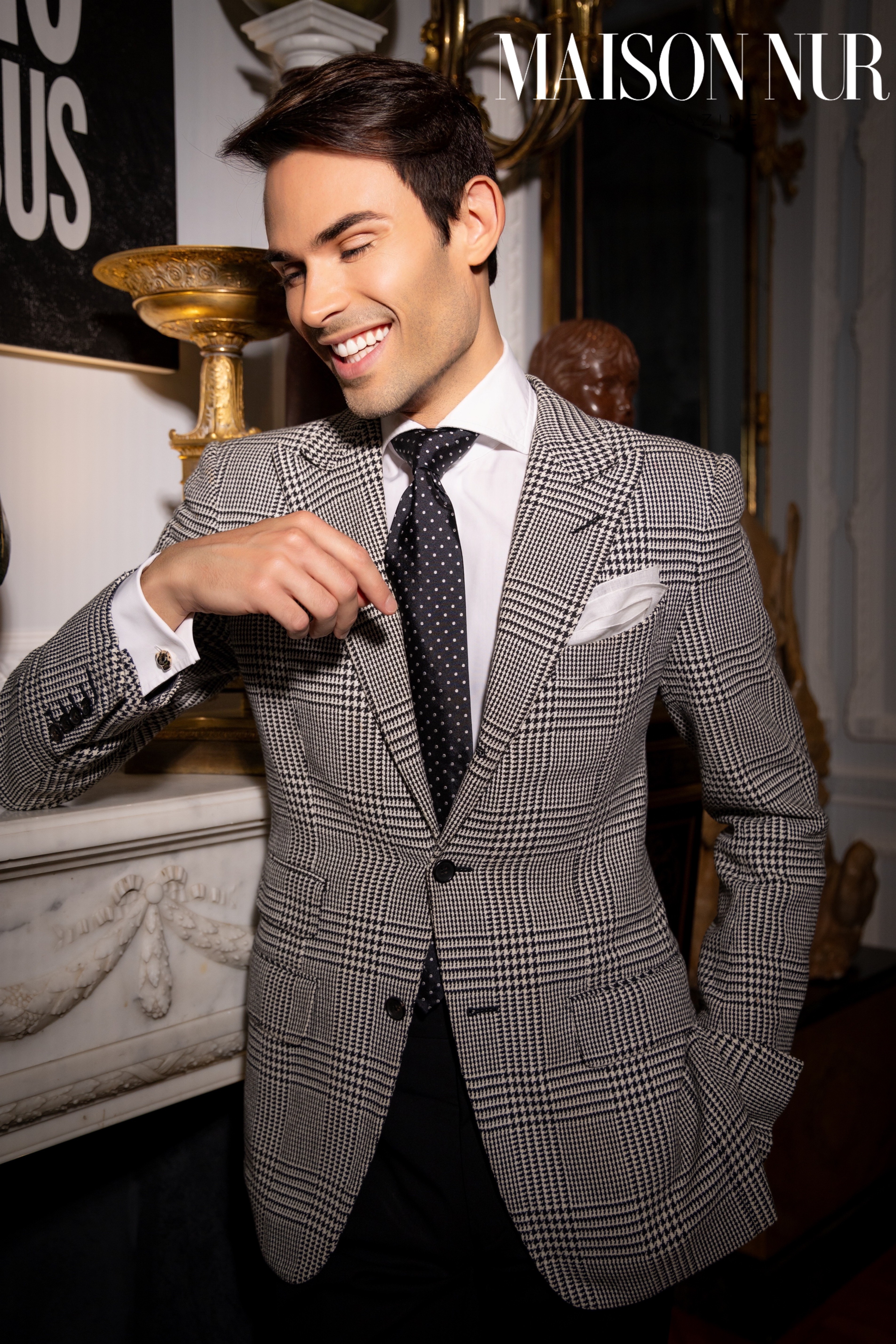
Away from the cameras, philanthropy occupies an equally serious place in his life. He is on the board of the London Air Ambulance, whose patron is The Prince of Wales, and once again hosted its annual gala at Raffles London at The OWO this year, helping raise more than £1.5 million. He also sits on the committees of the Caring Family Foundation, the Lady Garden Foundation and Chain of Hope.
“Balance matters. Television is enjoyable, business is intellectually satisfying, but charitable work reminds you that influence is only valuable if it can be put to use. Everything else is merely decoration.”
Perhaps that is the quality that has always made him slightly difficult to categorise. He has moved comfortably between fashion, art, jewellery, philanthropy and television without allowing any one of them to define him entirely.
Britain has produced no shortage of well-connected reality stars. It has produced very few who could step away from television tomorrow and remain entirely credible in the worlds that existed before the cameras arrived. Vandelli is one of them.
Which is why his longevity feels less like a triumph of celebrity than something altogether rarer. Trends reward visibility; taste rewards consistency. Fifteen years after he first appeared on screen, Mark-Francis Vandelli has outlasted almost every fashionable performance around him not by insisting upon his importance, but by quietly cultivating substance where everyone else settled for spectacle.
……
CEO & Editor-in-Chief: Kaniz Ali
Managing Director: Sibgha Batool
Art Director: Mirza Yasir Baig
Photography: Omer Janjua
Wardrobe: Cifonelli
Assisted By: Igor & Iman Chana
Location: Knightsbridge, London
Trending Stories


Stay up-to-date
Related Post


