
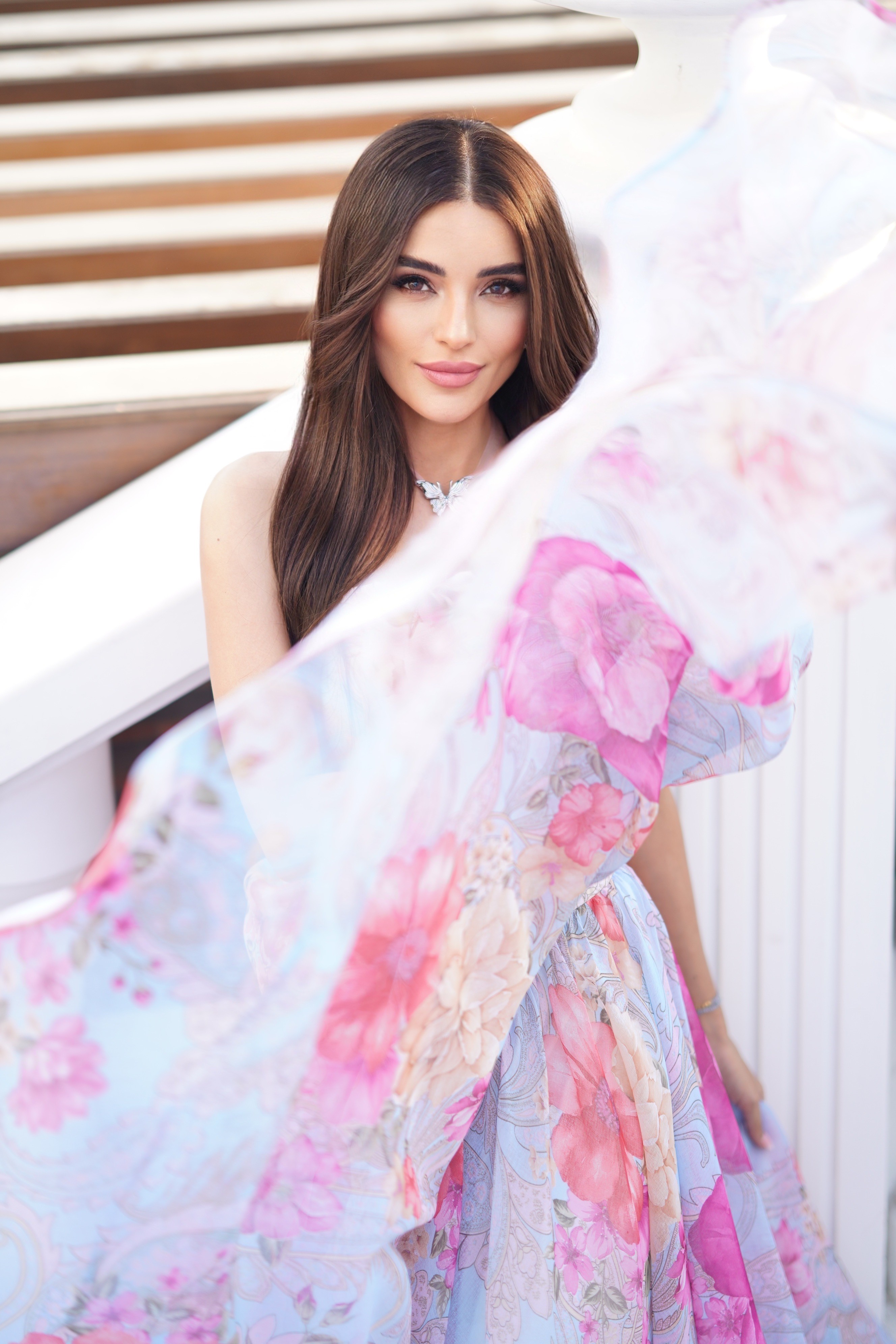
Plestia Alaqad is an award winning journalist, author and storyteller whose documentation of the genocide in Gaza brought the human reality of Palestinian life to a global audience. At just 21 years old, freshly graduated, guided by an unflinching commitment to the truth and carrying only a camera, she became one of the most important voices bearing witness to history in real time. Now 24, she is a published author of The Eyes of Gaza, a Master’s student in Media Studies at the American University of Beirut on the Shireen Abu Akleh Scholarship and a living reminder that Palestinian voices will not be erased. Plestia’s work is an act of resilience, memory and profound humanity.
In this issue of Maison Nur. Editor-in-Chief, Kaniz Ali sits with Plestia Alaqad in the heart of Cairo talking on everything life, journalism and Palestine.
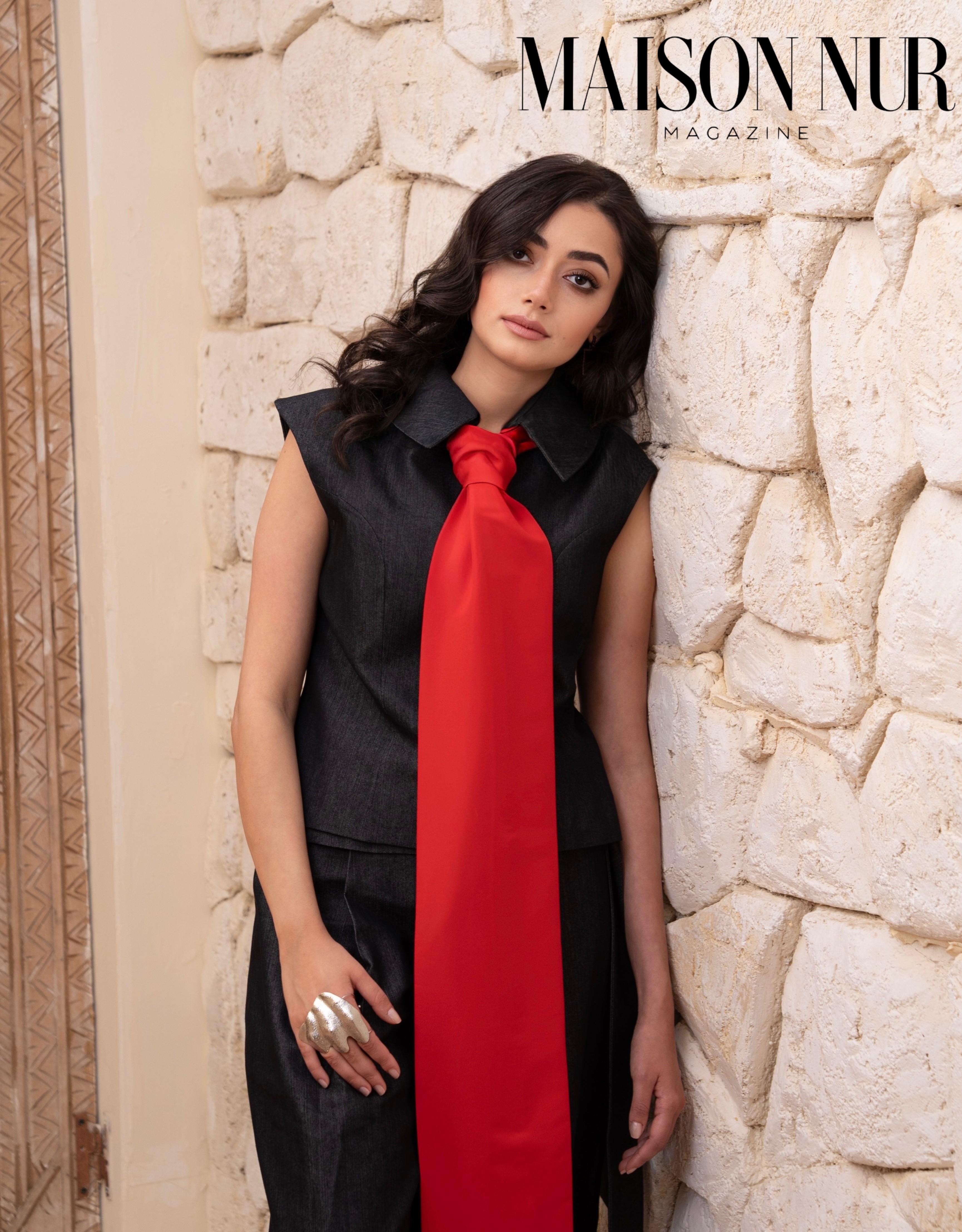
Kaniz: What was life like before the genocide in Gaza?
Plestia: Life in Gaza has always been challenging because of the occupation, yet we always tried to make the best out of the worst situations. Before the genocide, Gaza was still full of life, ambition and warmth despite everything. People outside often only imagine destruction when they think about Gaza, but for us it was also cafés full of conversations, the sea at sunset, university lectures, weddings, family gatherings, and friends finding reasons to laugh even during difficult times. What made Gaza special was the sense of community the way people carried each other through hardship.
Kaniz: People often forget how young you are. How did your family feel about you becoming a journalist?
Plestia: I’m 24 years old now and when I was documenting the genocide, I was only 21 and had just graduated. In many ways, that also shows how much time passes while the reality on the ground in Palestine still does not change enough.
My family has always been very supportive of me and my career. They believed in my voice and encouraged me to pursue journalism. But when Israel was targeting journalists and even their families, of course they were scared. There was always this balance between being proud of me and fearing for my safety at the same time.
Kaniz: Do you ever feel tension with being a journalist documenting the genocide?
Plestia: I don’t think anyone can fully separate themselves emotionally while witnessing their own people being killed. I was living through everything myself while reporting, so of course there were moments where it felt heavy and painful. But I also felt a huge responsibility to keep documenting and telling people’s stories, because the world needed to see what was happening in Gaza through the eyes of the people living it.
Kaniz: How do you take care of your mental and emotional wellbeing while covering difficult stories?
Plestia: When reporting, my priority was always the people. I tried to choose my words and questions carefully and make sure the people I was speaking to felt comfortable and respected especially while they were grieving and going through unimaginable pain.
Honestly, taking care of myself emotionally only became something I started thinking about after leaving Gaza. While I was there, I didn’t have the luxury to process what was happening or fully understand my own emotions. Everything was about survival, documenting, and making sure the world could see what was happening around us.
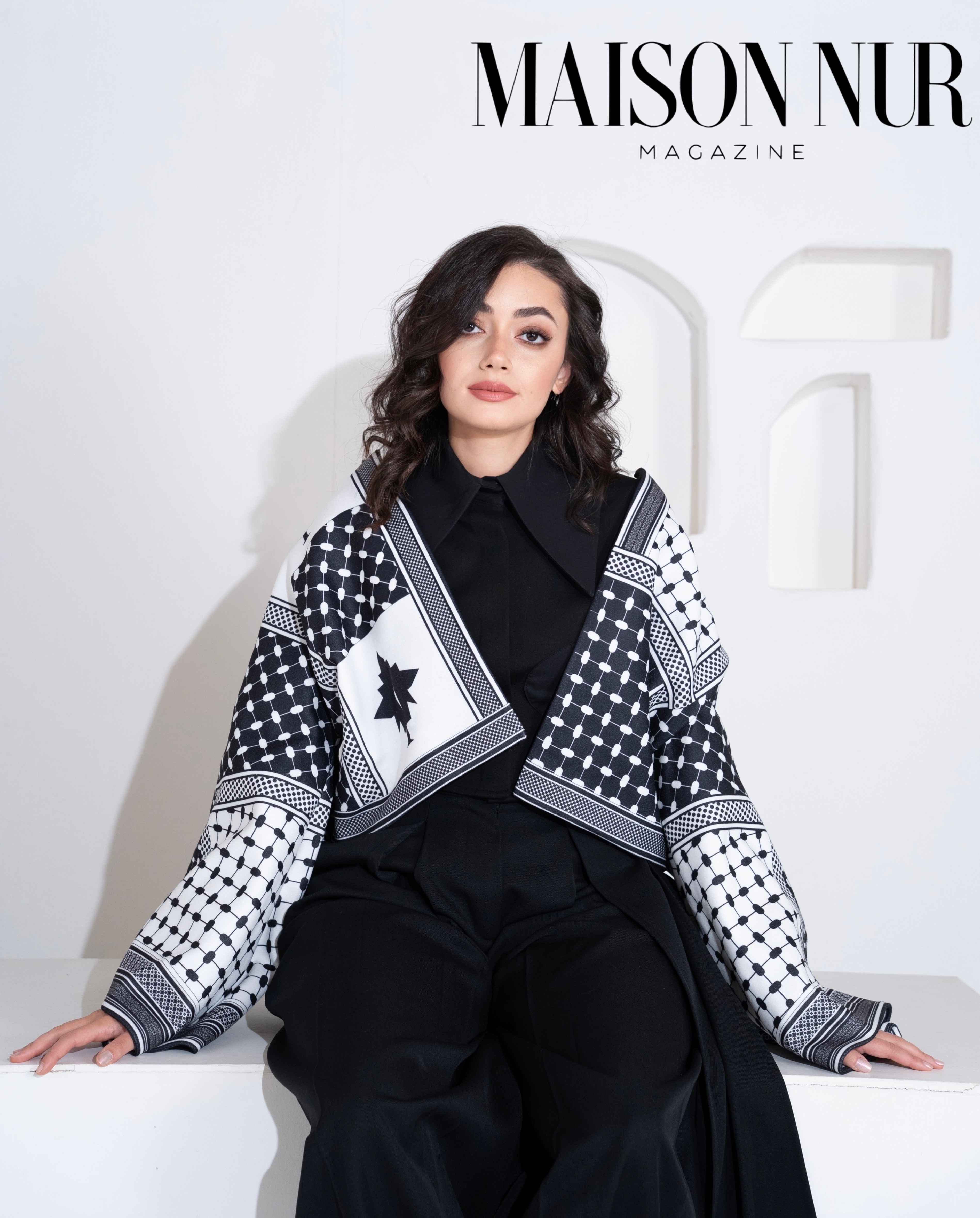
Kaniz: Do you ever feel the need to reclaim how you are seen beyond the role of “journalist”?
Plestia: The world came to know me as a journalist documenting and surviving a genocide and I will always carry that part of me with responsibility. But there is so much more to me and so much more to Palestinians than just survival. I’m also an author, a student, a young woman still growing and discovering herself. People often associate Palestinians only with pain and tragedy, but we are full human beings with dreams, personalities, creativity, humor and lives beyond what the world sees during genocide.
Kaniz: You are currently studying in Lebanon and now due to the war you have had to shift again. How does that make you feel?
Plestia: I’m currently completing my Master’s in Media Studies at the American University of Beirut on a scholarship that carries the name of Shireen Abu Akleh which is a profound honor for me as a Palestinian journalist. But living through constant uncertainty again, especially with Israel bombing Lebanon, has deeply affected my education and my sense of stability.
At the same time, I think people in our region become very familiar with having to continue despite everything. There is not much we can do except push through, hold onto hope, and keep pursuing the things we believe in even during the hardest moments.
Writing, Storytelling & The Book
Kaniz: What inspired you to write a book?
Plestia: What inspired me was the importance of telling our own narratives in our own words. So much of Palestine is spoken about by others, while Palestinians themselves are often unheard or misrepresented. Writing The Eyes of Gaza felt like a way of preserving our voices, emotions, memories, and humanity through lived experience. I’ve always loved writing and documenting, so turning those experiences into a book felt very natural to me.
Kaniz: What does it mean to you to have your story exist in a form that can’t be deleted or scrolled past?
Plestia: With social media, attention spans are becoming shorter and shorter. Everything moves so fast, and when it comes to Palestine, so much content gets shadowbanned, removed, or deleted entirely. That’s why The Eyes of Gaza means so much to me. It feels like a way of documenting history in a form that cannot simply be scrolled past or taken down. A book stays. It can be passed from one generation to the next, and hopefully years from now people will still be able to read it, understand what happened in Gaza, and connect with the humanity behind the headlines.
Kaniz: Do you see yourself writing another book?
Plestia: I do, but not anytime soon, I’d really like to take my time with it and fully enjoy the process. The Eyes of Gaza came from a deep sense of urgency. It was important for me to document and preserve what was happening as quickly as possible while the world was witnessing the genocide in real time. I think the next book would be a very different experience.
Kaniz: What’s one aspect of Palestinian fashion you wish people knew more about?
Plestia: I wish people understood the history behind the kuffiyeh and Tatreez, and the significance of what they’re wearing. These pieces are not just fashion they carry identity, culture, and history. Tatreez especially holds stories from different Palestinian villages and generations of women who preserved our culture through embroidery. Different regions of Palestine have their own colors, patterns, and techniques. In Gaza, for example, Tatreez is known for its vibrant colors bright red and orange and motifs such as the palm tree, the pillow and the scissors.
The kuffiyeh, too, became a symbol of resilience and solidarity through years of struggle. These pieces mean so much more when people wear them with understanding and respect not just for the aesthetic.
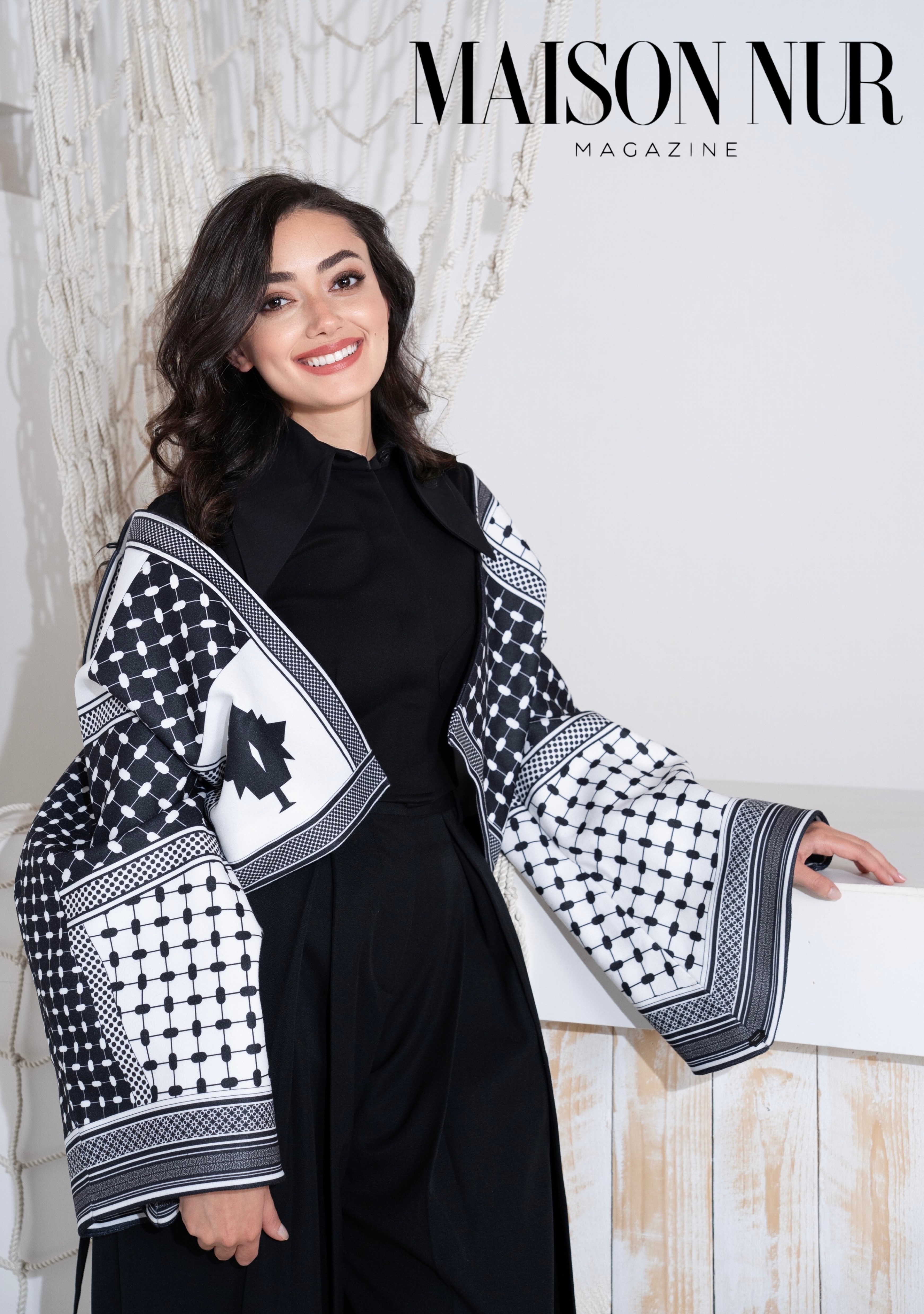
Kaniz: Describe your personal style in three words.
Plestia: Comfortable, casual, and meaningful.
Kaniz: Three beauty or skincare products you can’t live without?
Plestia: Sunscreen, hand cream, and a journal because I consider it a beauty product for the brain.
Kaniz: Do you have a beauty ritual that’s stayed constant, no matter what’s happening around you?
Plestia: Applying sunscreen. No matter what is happening around me, it is one small act of care that I always make sure to do.
Kaniz: Many people see you as an inspiring voice for your generation. How do you cope with the responsibility of being internationally recognised?
Plestia: I try not to focus too much on recognition itself. What matters most to me is staying honest, purposeful, and connected to the people and stories I come from. I hope I inspire people to never turn a blind eye to atrocities happening anywhere in the world to stay true to themselves, and to always try to do and be better. At the end of the day, having humanity and using your voice for what is right is far more important than recognition.
Kaniz: What is your message to the world?
Plestia: It’s more of a kind reminder than a message: be your own person, and don’t let the world numb your humanity. Always stand with what is right even when it’s uncomfortable and even when nobody around you is doing it. I truly believe the smallest acts of courage, empathy, and honesty can create more change than people realize. At the end of the day, how we make people feel and how we choose to show up for others is what truly stays behind.
Kaniz: What does it mean to you to have a scholarship established in your name ?
Plestia: I am honored to share that Eastern Mediterranean University is offering the Plestia Alaqad EMU Media Scholarship, a 100% tuition scholarship, awarded on merit, for one Palestinian student from Gaza to study at the Faculty of Communication and Media Studies.
Journalism has taken me from classrooms to the hardest places a heart can go. It has taught me that telling the truth is not only about what is seen, but about refusing to let people be erased.

CEO & Editor-in-Chief: Kaniz Ali
Managing Director: Sibgha Batool
Art Director: Mirza Yasir Baig
Photography: Houssam
Videography: Mahmoud
Make Up by: Kaniz Ali
Senior Stylist: Yasmine Hany
Assistants: Farrah Fayed & Logine Aboutaleb
Wardrobe by: Mohamed Nour, Farah Seif, Mamzi by Mariam Abdelghany, Sara Onsi
Jewellery by: Schiaparelli
Shoes by: Shoe Zed
Location: Cairo, Egypt
Trending Stories


Stay up-to-date
Related Post


