
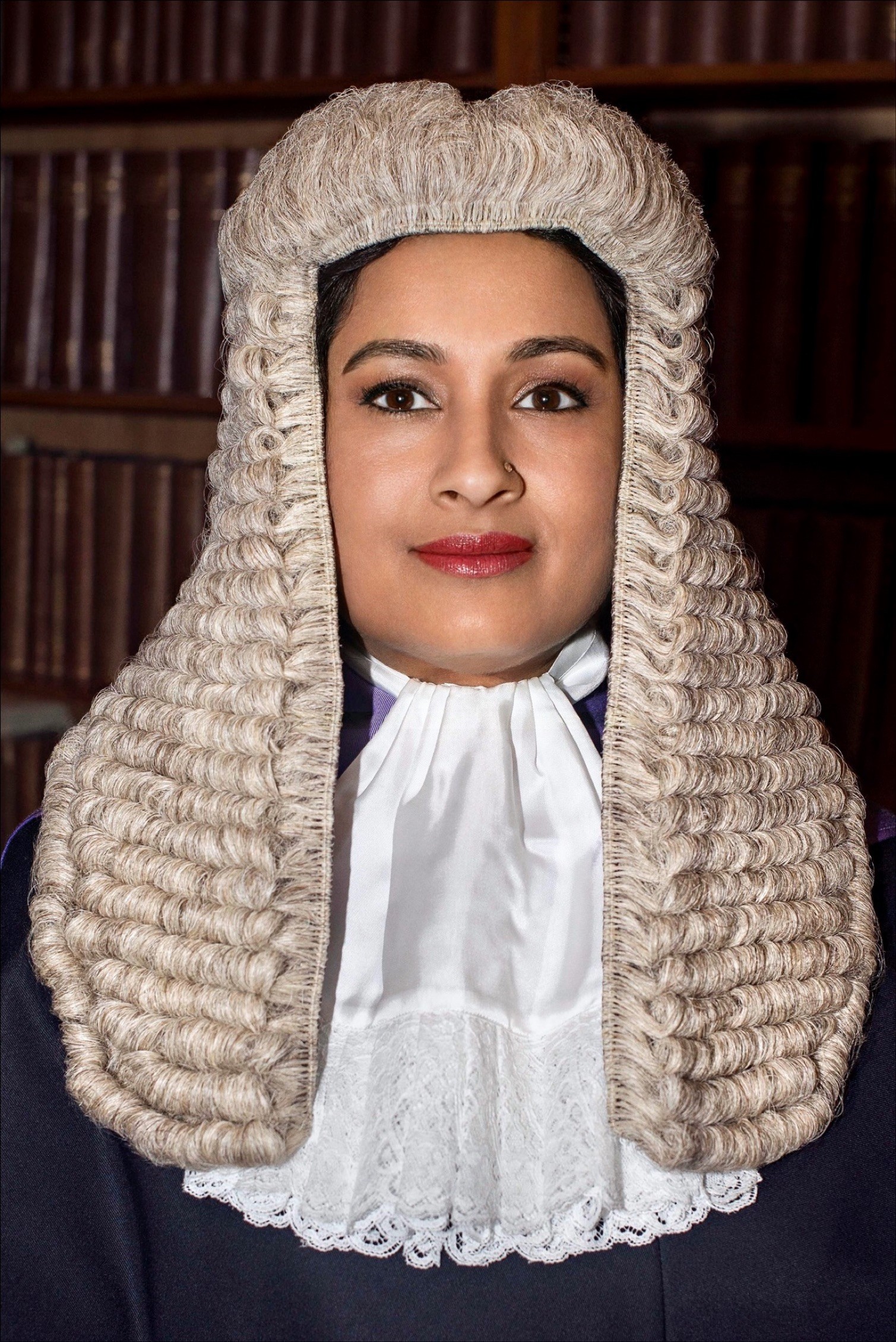
Her Honour Judge Khatun Sapnara is a prominent judge in the UK. She is a Senior Circuit Judge and is authorised to act as a Judge of the High Court. She is the most senior Muslim woman in the UK judiciary, having been appointed by Queen Elizabeth II.
Born in Bangladesh and raised in Britain from the age of seven, she became the first person of Bangladeshi heritage to be appointed a judge in this country. She has spent over three decades on the Bench and at the Bar and was instrumental in the creation of the Forced Marriage (Civil Protection) Act 2007. She has advised Ministers and two Prime Ministers, and sits on the boards of some of Britain’s most vital charities.
Khatun Sapnara has broken many glass ceilings and spent over three decades reshaping institutions in which most people are never invited to have a seat at the table, let alone to influence and change, methodically and unflinchingly from within.
As Designated Family Judge of the Central Family Court, which is the largest, busiest family court in England and Wales she presides over an institution which profoundly affects thousands of lives a year. She was the first person of British Bangladeshi heritage to be appointed a judge in this country and also sits in criminal cases in the Crown Court. Each title earned was uncharted ground on arrival.
A JOURNEY OF UNRELENTING RESOLVE
The story begins in a village in Bangladesh, in the shadow of civil war. In 1973. Aged seven, she arrived in Britain. State -educated, by 1988 she held an LLB with Honours from the London School of Economics (University of London). By 1990 she was called to the Bar, at a time when women barristers were still forbidden to wear trousers in court and a woman of colour at the Bar was so rare that it drew stares.
She built a practice recognised by the legal directories as a leading barrister in her field, and an expert in domestic abuse and so called “honour”-based violence, all while shouldering the responsibilities of a traditional Asian extended family, caring for two generations at once - her parents-in-law and her own children.
THE BENCH, REDEFINED
In 2006, aged 39 she was appointed a Recorder (part-time judge while still in practice as a barrister). In 2014, she was appointed to the judiciary full time as Circuit Judge. She moves fluently between two disciplines few judges combine: presiding over both the weight of criminal cases and the delicate human terrain of Family Court proceedings in the Family Court.
In 2016, she was described in the Times newspaper as a judge who is “commanding, authoritative and compassionate”.
In 2015, she was named a Judicial Role Model by the former Lord Chief Justice. By 2019, she was authorised as a Deputy High Court Judge. By 2024, she moved into a significant judicial leadership role, appointed by the first Lady Chief Justice of England and Wales to lead the Central Family Court. Elected as a Bencher of the Honourable Society of Middle Temple (one of the four ancient Inns of Court) she has a prestigious role in the education of future generations of barristers.
THE STATESWOMAN BEHIND THE LAW
In 2004 she was the first person of a minority ethic background to be elected to the Family Law Bar Association and has served also on Bar Council Committees.
In 2006 she was awarded the Public Appointment of expert on the Family Justice Council - advising Government on all aspects of the family justice system. For many years she taught judges at the Judicial College, set the Judicial Appointments Commission's test papers and sat on its selection panels to appoint new judges.
She was awarded the honorary degree of Doctor of Laws, Honoris Causa from Royal Holloway, University of London, for her exceptional contribution to the British justice system and was made an Honorary Fellow of the University of East London in 2022.
She spends much of her time mentoring students, aspiring lawyers and junior judges.
A LIFE OF SERVICE, BEYOND THE ROBES
Ask her about the demands of such a career, and she answers with characteristic understatement: *"despite the challenges, I am grateful and privileged to have combined a fulfilling and stimulating career with a family life which I prize highly, while also having opportunities to offer my passionate commitment to public service - a value my late parents instilled in me”. Her patronage spans Trustee of the British Asian Trust, under the patronage of His Majesty King Charles III; the Lord Chief Justice's nominated Trustee on the Access to Justice Foundation; Board member of Rights of Women; an advisor to Women's Aid and the NSPCC. Closest to her heart was her chairmanship of Ashiana, the only domestic violence refuge in the country dedicated to South Asian women fleeing forced marriage.
A LEGACY, STILL BEING WRITTEN
*"I have devoted my whole adult life to public service and meaningful, progressive social change,"* she says words that read as biography, but which have governed more than 40 years of demonstrable action. For Maison Nur, Her Honour Judge Khatun Sapnara embodies the standing we most admire: earned, built, and shared with every woman who follows.
Trending Stories




Stay up-to-date
Related Post


