
Shriya Saran is one of Indian cinema's most quietly formidable forces, a rare actor who has built a genuine, lasting career across Tamil, Telugu and Hindi film industries rather than choosing just one. Since her 2001 debut, she has starred in some of the subcontinent's biggest blockbusters, including Sivaji, RRR and the Drishyam franchise, cementing her status as a true pan Indian icon. Twenty five years on, she remains as compelling, in demand and utterly unstoppable as ever.

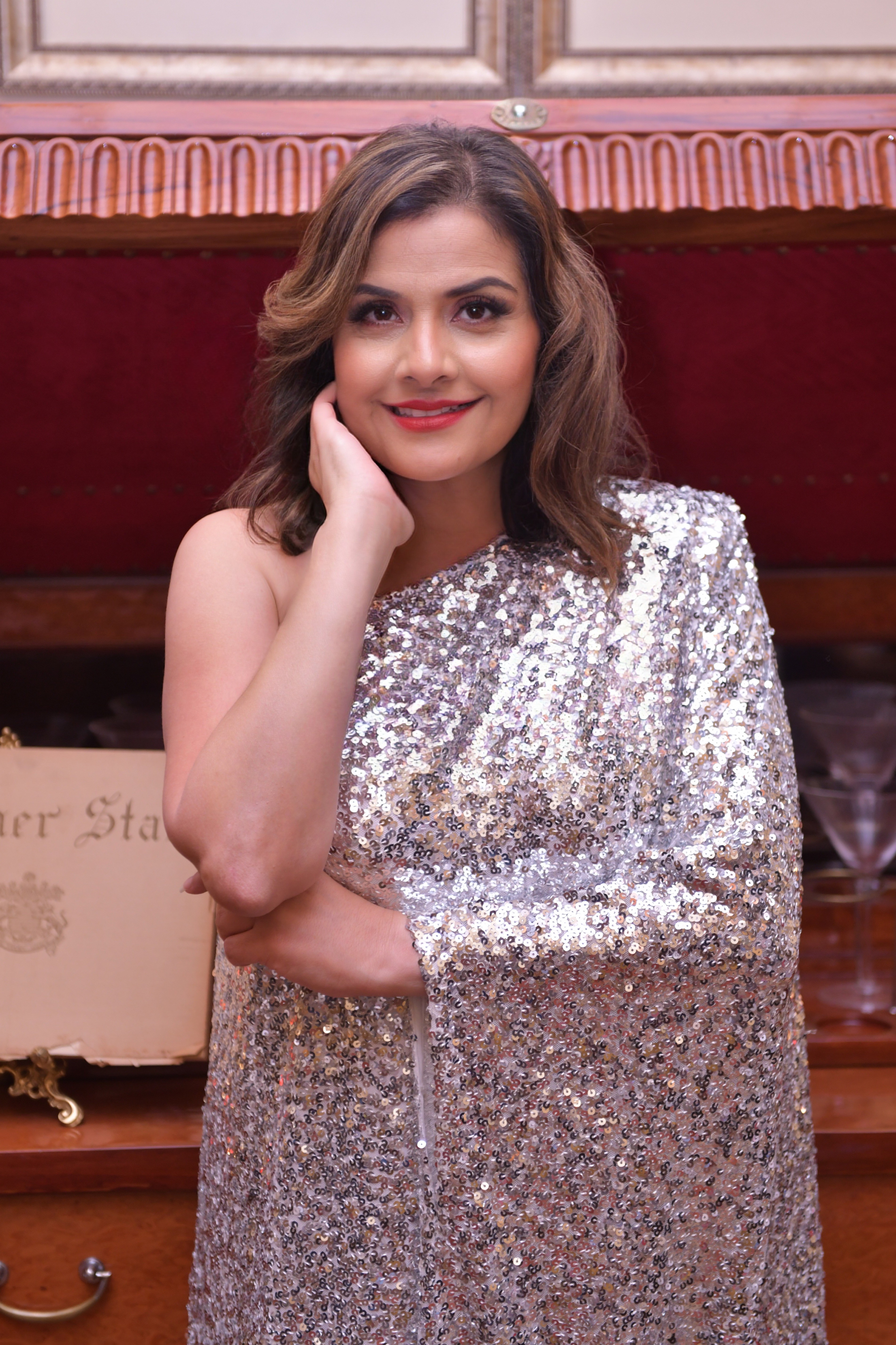
There is something quietly radical about longevity in an industry built on the next big thing. Twenty-five years into a career that has moved fluidly between Tamil, Telugu, Hindi and beyond, actor Shriya Saran has never chased reinvention for its own sake. She has simply kept building, role by role, language by language, until the body of work became a statement all its own. This month, Maison Nur turns its lens to her.
Saran made her debut in 2001, in an industry that rarely rewards patience and found her first real commercial foothold a year later with the Telugu hit Santosham. What followed was not a single breakout so much as a slow, deliberate takeover of Indian film itself: Tamil blockbusters, Telugu institutions, Hindi crossovers, the occasional English language production, each one adding a new register to an already extraordinary range. Few actors of her generation can claim genuine fluency across three major film industries and fewer still have made that fluency look effortless rather than calculated.
By the time she stepped into Sivaji, then the highest grossing Tamil film ever made, she had already proven something most actors spend a lifetime trying to prove: that she could be essential to a story without needing to be its loudest voice. That film alone would have secured most careers, but Saran treated it as one triumph among many, following it with Azhagiya Tamil Magan, Kanthaswamy and a run of high budget Hindi productions that cemented her as one of the defining leading women of South Indian cinema at the exact moment that cinema was becoming the most commercially dominant force in the country.

That instinct, to root herself rather than pass through, feels almost radical in an entertainment landscape obsessed with crossover and scale. Saran found her scale by going deep instead of wide. She never treated the South Indian film industries as a stepping stone to something bigger; she treated them as the destination, and made that destination glitter. So when Hindi cinema, and eventually global audiences, came calling in earnest, it came because she had already built something extraordinary worth borrowing. It is a philosophy of career building that mirrors something larger happening in culture right now: a return to craft over velocity, to the long game over the fleeting viral moment.
Her filmography reads less like a résumé than a map of an industry in constant motion, and what a map it is. Across more than sixty films and counting, she has glided between genres with the same ease she glides between languages: action, drama, thriller, comedy, even science fiction epics. She was part of the ensemble that made RRR a genuine global phenomenon in 2022, one of the rare Indian productions to break decisively into Western consciousness and change how the world talks about Indian cinema altogether. She held her own, magnificently, opposite some of the most formidable actors working today in Drishyam 2, a film that demanded quiet, coiled intensity rather than spectacle and delivered it in spades. And she has kept going, taking on Mirai, Retro, Music School and the television drama Showtime in recent years, proof of an actor still curious, still hungry, still refusing to coast on what she has already proven a hundred times over.
What sets Saran apart from so many of her contemporaries is not any single towering performance but the sheer, staggering consistency of her presence across two and a half decades of shifting industry trends. She has worked through the rise and fall of entire genres, through the multiplex boom, through the arrival of streaming, through the globalisation of Indian cinema, and she has done it all without the panic of an actor scrambling to stay relevant. Her career has instead accrued the way the very best work always does: steadily, almost invisibly, until one looks up and realises she has been indispensable to Indian cinema in three languages for longer than many of today's biggest stars have been alive. That is not a career. That is a legacy in motion.
Off screen, that same instinct towards building rather than borrowing shows up in everything else she touches. She has taken on brand partnerships with genuine discernment, thrown her weight behind charitable work including a spa initiative employing visually impaired staff, and protected a personal life with real grace even while working in an industry that rewards oversharing. Married since 2018 and a mother, she has managed the genuinely rare feat of expanding her personal world without shrinking her professional one, continuing to work across industries and formats even as her life beyond the frame has deepened. There is a rare consistency to it all, the sense of a woman constructing a life with exactly the same care she brings to a character: unhurried, intentional, built to hold weight rather than to dazzle for a single headline.

It is worth dwelling, too, on how little Saran has ever relied on one defining image to carry her. She has never been reducible to a single genre, industry or role: the glamorous lead, the intense dramatic actor, the comic foil, the emotional anchor. She has been all of these, often within the same year, and has resisted every attempt to flatten her into something easily filed away. That refusal to be pinned down is, in its own right, a form of ambition: the ambition to keep working on her own terms rather than on the industry's shorthand for her, a rarer and far braver choice than it sounds.
This year, that extraordinary accumulation reaches something of a milestone, as Saran returns to one of the defining roles of her career, Nandini Salgaonkar, in the long awaited conclusion to the Drishyam franchise, releasing this October. It is a fitting point to arrive at: not a debut, not a comeback, simply the latest triumphant chapter in a body of work that has never needed either. The film will make headlines of its own in the weeks ahead. But the real story, the one worth savouring, is the one Saran has been writing for twenty five years: patiently, brilliantly, across languages and industries, without ever needing a single moment to define her.
Because the very best careers, like the very best women, are simply built to last.
Maison Nur UK
Editor-in-Chief: Kaniz Alin
Managing Editor: Sibgha Batool
Photography by James Rudland
Make Up & Styling: Kaniz Ali
Hair by Iman Chana
Outfit by Sitara Kudige
Jewellery by Silver Streak
Location: Taj Hotel St James Court
Digital Manager: Oliver McCourty
Managed by Mauve Nur Group
Trending Stories



Stay up-to-date
Related Post


